Winter Oxalic Acid Treatment: A UK Beekeeper's Guide
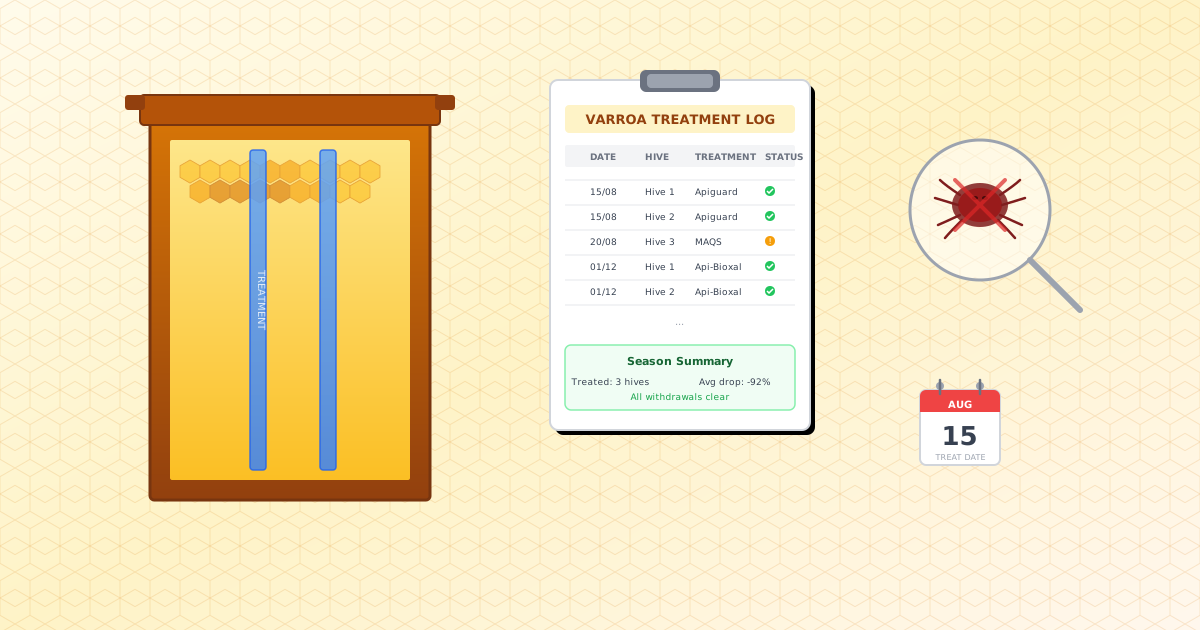
Midwinter is the quietest time in the apiary, but it is also the single best opportunity of the year to reduce your varroa load. When a colony has no sealed brood, every mite is riding on an adult bee, exposed and within reach of treatment. A well-timed oxalic acid treatment in that window can remove the large majority of the mites in a colony and give your bees a clean start to spring.
This guide covers how UK beekeepers time a winter oxalic acid treatment, the two common application methods, the safety basics, and the records you need to keep afterwards.
Why Treat in Winter?
Varroa mites breed inside capped brood cells. While a colony is rearing brood, most of the mite population is hidden under cappings where oxalic acid cannot reach it. That is why a single oxalic acid application in summer has limited effect.
In winter, many UK colonies stop rearing brood for a short period, usually after the first sustained cold spell. With no capped brood, the mites have nowhere to hide. A single treatment at this point does far more than the same treatment at any other time of year.
Treating in winter also means mite numbers start the season low, so the population takes longer to build to damaging levels before your late-summer treatment.
Finding the Broodless Window
Timing is everything. The traditional rule of thumb in the UK is to treat between Christmas and New Year, but colonies vary by region, weather and strain of bee.
- Look for a cold spell: A week or two of cold weather in December usually stops the queen laying. Treating shortly after such a spell gives the best chance of a broodless colony.
- Check the varroa board: Biscuit-coloured cappings on the insert tray show the bees are still uncapping brood. A board with only dark debris suggests brood rearing has paused.
- Do not wait too long: Colonies start rearing brood again in January as the days lengthen. In mild winters, especially in the south of England, some colonies never fully stop.
- Pick a still, dry day: Choose a day when the bees are clustered and not flying, ideally between about 3°C and 8°C, so you can open up briefly without chilling the cluster.
If you inspect a colony in late autumn and find it still has brood, it is worth noting this in your records so you know which colonies to watch closely at treatment time.
Trickling vs Vaporising
Oxalic acid can be applied in two main ways. Always use a product authorised by the Veterinary Medicines Directorate (VMD) for use in honey bees, such as Api-Bioxal, and follow the dose and method on the product label exactly.
Trickling
- How it works: The oxalic acid is mixed with sugar syrup and a measured dose is trickled directly onto the bees in each seam (the gap between frames) using a syringe or doser.
- Pros: Cheap, quick and needs no specialist kit beyond a syringe.
- Cons: The crown board must come off, so the cluster is briefly exposed. Trickling is generally limited to one application per winter, because repeated trickling is harmful to the bees.
- Tip: Warm the solution to around blood temperature before you use it so it does not chill the cluster, and count the seams of bees first so you know the total dose before you start.
Vaporising (Sublimation)
- How it works: Oxalic acid crystals are heated in a vaporiser inserted through the entrance or a port in the floor, and the vapour coats the bees and the inside of the hive.
- Pros: The hive stays closed, and it is generally better tolerated by the bees, so it can be repeated where the product label allows.
- Cons: Needs a vaporiser, a power source (usually a 12V battery) and proper respiratory protection. The vapour is hazardous to people.
Safety First
Oxalic acid is toxic and corrosive. Whichever method you use:
- Wear chemical-resistant gloves and eye protection when handling crystals or solution.
- When vaporising, wear a respirator rated for acid gases and particulates, stand upwind, and keep people and pets well clear.
- Label your solution clearly and store it out of reach of children. Do not keep mixed syrup for next year: it degrades into compounds that are harmful to bees.
- Read the product safety data sheet before your first treatment.
Record It Properly
Oxalic acid products are veterinary medicines, so the VMD expects you to keep a record of every treatment. Records should be kept for at least five years and should include:
- The product name and batch number
- Where and when you bought it
- The date of treatment and which hives were treated
- The quantity used
- The date you finished the treatment
- The withdrawal period, if any, and when you disposed of any leftover product
It is also worth recording the mite drop on your varroa board in the days after treatment. A high drop confirms the treatment worked and tells you which colonies were carrying the heaviest loads going into winter. Our varroa treatment record template covers the full set of fields.
Keep Your Winter Records in HiveLog
HiveLog was built for exactly this kind of record. You can log a treatment against each hive in a few taps at the apiary, including the product, dose and date, and see your treatment history for every colony in one place when spring comes round. Varroa board counts from your inspections sit in the same hive history, so you can see whether your winter treatment really made a difference.
HiveLog is free for up to two hives, and treatment records are part of Premium ($5/month or $45/year), which you can try free for 14 days. You can create an account here and log your winter treatment on the day you do it, rather than trying to remember the details in March.
Further Resources
- National Bee Unit (BeeBase): varroa management guidance and advisory leaflets
- VMD: authorised veterinary medicines for bees and record-keeping requirements
- BBKA: British Beekeepers' Association guidance on winter colony care
- Your local beekeeping association: many run winter treatment demonstrations and can advise on local timing
Track inspections, treatments, and harvests — all in one place
Stop juggling paper notes and spreadsheets. HiveLog makes record-keeping quick, organised, and accessible from any device. Start your 14-day free trial today.
Free for 2 hives • 14-day premium trial • Cancel anytime